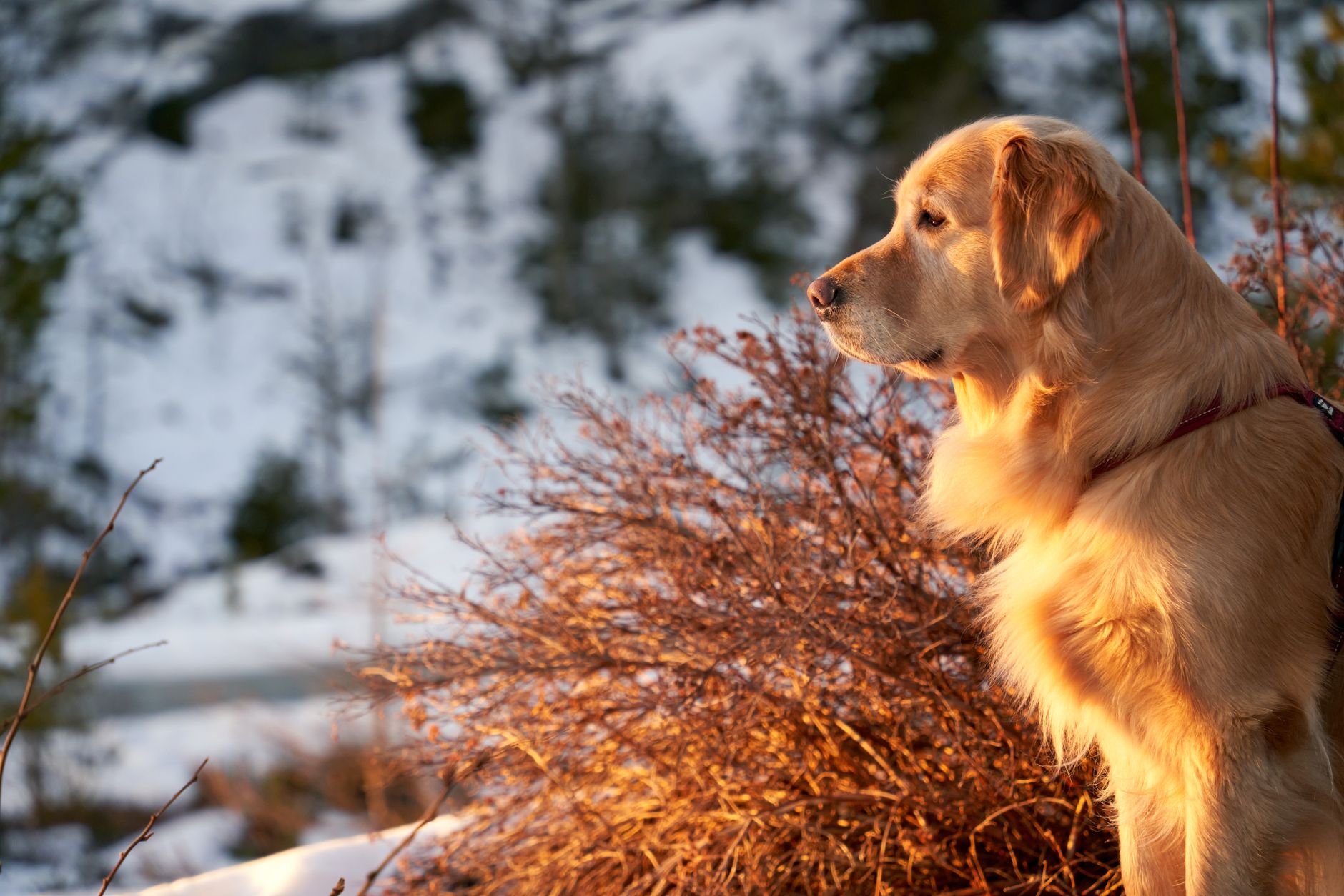

What Makes a Portrait "Cosmic"
A cosmic pet portrait isn't astrology about your dog—it's astrology as your dog. The artist takes the chart placements you'd find in a reading—sun sign, moon sign, rising, Venus, Mars, the works—and builds them into the composition itself. Constellations arc across the background. Planetary glyphs nestle near their ears. The color palette shifts to match their elemental makeup: fire signs get warm golds and crimsons, water signs pull in deep indigos and silvers, earth signs ground into ochres and moss greens, air signs float in pale blues and lavenders.
The portrait holds two layers at once. On the surface: your dog's face, rendered in oil or watercolor or digital paint, capturing the specific tilt of their head or the way one ear flops. Underneath: the sky they were born into, the cosmic weather of that exact day and hour, translated into line and color. It's a way of saying this is the shape of their energy without needing to explain it in words. You look at the painting and you feel the Aries fire or the soft Pisces dreaminess before you consciously register the symbols.
I've worked with clients who've never touched astrology before commissioning a cosmic pet portrait. They don't need to believe in retrogrades or houses. They just recognize something true in the image—the way the chart placements make sense of the personality they've lived with for years. The stubborn Taurus golden retriever who roots to the ground on walks. The Gemini border collie who talks back and needs three kinds of enrichment. The chart becomes a language for a thing you already felt.
The Information the Artist Needs

To generate an accurate birth chart, the artist requires three pieces of data: birth date, birth time, and birth location. Date alone gives you the sun sign—the core self, the engine. But the moon (emotional life, instinct) and rising (how they meet the world, first-impression energy) both move quickly through the zodiac, shifting signs every couple of days and every couple of hours, respectively. Without time and location, you're painting half the chart.
For dogs, birth time is often approximate. Shelters rarely record it. Breeders sometimes note "morning litter" or "born around 3 PM," which is enough to narrow the rising sign to two or three possibilities. If you have no time at all, many artists will use noon as a default or calculate a solar chart (which sets the rising to match the sun). The portrait loses some specificity, but the sun and slower-moving planets—Venus, Mars, Jupiter—still shape the aesthetic.
Location matters because astrology is geocentric: the chart maps the sky from a specific point on Earth. A puppy born in Seattle sees a different rising sign than one born in Miami at the same clock time. The artist inputs the coordinates into astrology software (or uses an ephemeris if they calculate by hand), generates the chart wheel, and notes which signs and houses hold which planets. Those placements become the visual anchors. A Mars in the 5th house might get emphasized near the heart of the composition. A moon in Cancer might pull more water imagery into the background.
According to the American Kennel Club, even without exact birth data, many owners intuitively sense their dog's core temperament—and astrology offers one framework for naming what they already observe.
The Artistic Process: From Chart Wheel to Canvas
Once the chart is calculated, the artist begins translation. Some work digitally, layering the chart wheel directly into the background as a faint geometric mandala. Others paint traditionally, sketching constellation lines in pencil before applying pigment. The goal is integration—the astrology shouldn't feel pasted on. It should emerge from the same visual logic as the portrait itself.
Color is the first decision. A fire-dominant chart (sun, moon, or rising in Aries, Leo, Sagittarius) might pull in burnt oranges, deep reds, solar yellows—colors that vibrate with heat and movement. A water-heavy chart leans into twilight blues, seafoam greens, the kind of palette that feels like looking into a tide pool. Earth signs ground the image in neutrals: taupes, mossy greens, warm browns that anchor the eye. Air signs get the palest colors—soft grays, cloud whites, the barely-there lavender of early morning sky. These aren't arbitrary. They're elemental. They match the texture of the energy the chart describes.
Next, the artist maps symbolic elements. If your dog has Venus in Libra, you might see a subtle rose motif or balanced symmetry in the composition. Mars in Scorpio could bring in deeper shadows, a more intense gaze, maybe a hint of obsidian or volcanic rock texture. The moon's sign often dictates the emotional weather of the background—Cancer moons get softer, more nurturing backdrops, while Aquarius moons might include geometric stars or a cooler, more detached sky.
The dog's face remains the focal point. The chart doesn't obscure them; it frames them. A husky with a Sagittarius rising might be painted mid-run, the background suggesting open plains or distant horizons. A pug with a Taurus sun might be rendered in a more grounded, frontal pose, the kind of solid presence that doesn't need to move to make an impression. The astrology informs posture, expression, even the direction of the light.
Why People Commission Them
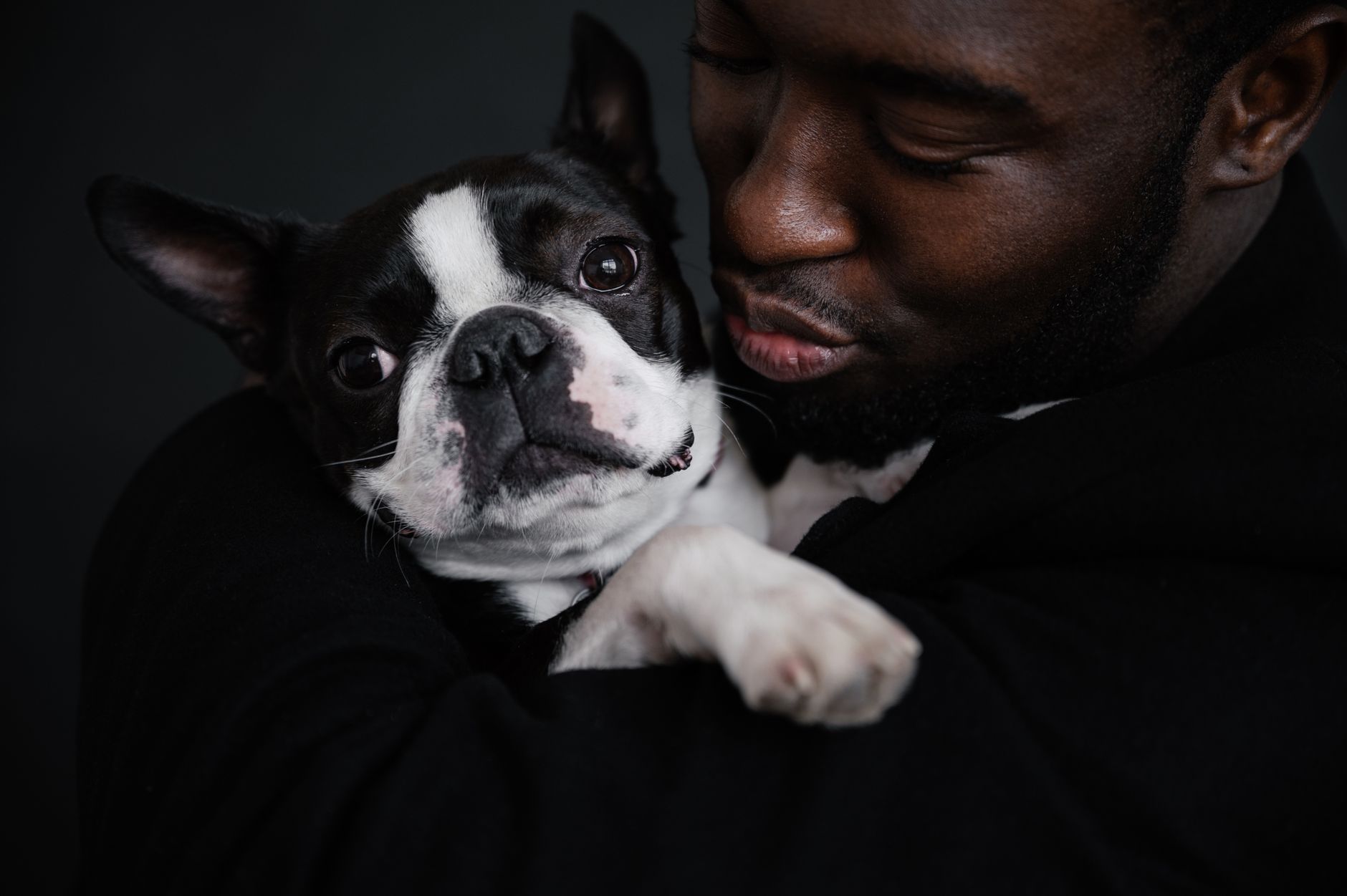
Some clients come to a cosmic portrait after a reading. They've had their dog's chart interpreted, felt the accuracy of it, and want a visual artifact of that recognition. The portrait becomes a way to hold the reading in physical space, to remember oh right, he's a Cancer moon every time they pass it in the hallway.
Others commission them as memorial pieces. After a dog passes, the chart feels like a map back to who they were—not just memory, but essence. The portrait doesn't try to make the grief smaller. It honors the full complexity of the bond, the way that dog's particular energy shaped your daily life for years. I've seen people weep in front of these paintings not because they're sad, but because the image gets it. The fixed-sign stubbornness. The mutable adaptability. The way their dog was exactly themselves, and the chart names that without sentimentality.
And some people just love the aesthetic. They're drawn to the cosmic style the way others are drawn to watercolor or Renaissance or vintage Victorian. The astrology becomes part of the art's texture, even if they don't study the chart in detail. It's enough that the painting feels layered, that it suggests depth and meaning beyond the surface. It makes the portrait more than a likeness—it makes it a cosmology.
Choosing an Artist and Style
Not all cosmic portraits look the same. Some lean heavily into realism, with the chart elements rendered as faint overlays—barely-there constellation lines, translucent planetary glyphs. Others go full maximalist: bold zodiac symbols, saturated nebula backgrounds, the dog's face emerging from a swirl of stars and geometric patterns. The style you choose depends on what you want the portrait to do. A subtle version blends into most home aesthetics. A bold version becomes the room's focal point, the piece guests ask about.
When selecting an artist, look at their gallery and note how they handle integration. Do the astrological elements feel organic, or do they sit on top of the portrait like a separate layer? Does the color palette shift to reflect the chart, or is it one-size-fits-all? A good cosmic portrait artist treats the chart as compositional architecture, not decoration. They're not just adding stars—they're building the image around the logic of the placements.
You'll also want to clarify what information they include. Some artists paint only the big three (sun, moon, rising). Others map the full chart, including aspects (the angles between planets) and house placements. More information isn't always better—it can make the image feel cluttered. But if your dog has a particularly striking configuration—say, a stellium in one sign, or a tight Mars-Pluto conjunction—that might be worth emphasizing visually.
What You're Left With
A finished cosmic pet portrait is both artifact and mirror. It's a piece of fine art you can frame and hang, yes. But it's also a daily reminder of the specific soul you share your life with. The chart placements don't explain away behavior—they don't excuse the Aries dachshund for charging at the mail carrier—but they offer a frame. They say this is the weather system they were born into, and it shaped the way they move through the world.
You don't need to consult the chart every day. You don't need to memorize what Venus in Gemini means. The portrait does its work just by existing in your periphery. You glance at it in the morning and remember: oh, right, she's a water moon. That's why she's so sensitive to my mood shifts. Or: he's a fire rising. That's why he greets every visitor like they're the second coming. The astrology becomes shorthand for empathy, a way of honoring the fact that your dog is not a blank slate—they came in with a shape already.
And when people ask about the painting, you get to tell them. Not in a way that requires belief or conversion, just as fact: This is his birth chart. This is the sky he was born under. It's a story about him that doesn't flatten him into a good boy or a handful. It's a story that holds complexity. And that, more than the stars or the symbols, is what makes the portrait cosmic.
Sources
- American Kennel Club. "Dog Birthday Personality Traits." AKC.org. https://www.akc.org/expert-advice/lifestyle/dog-birthday-personality-traits/
See your dog painted the way you see them
Written by River. See their portrait →