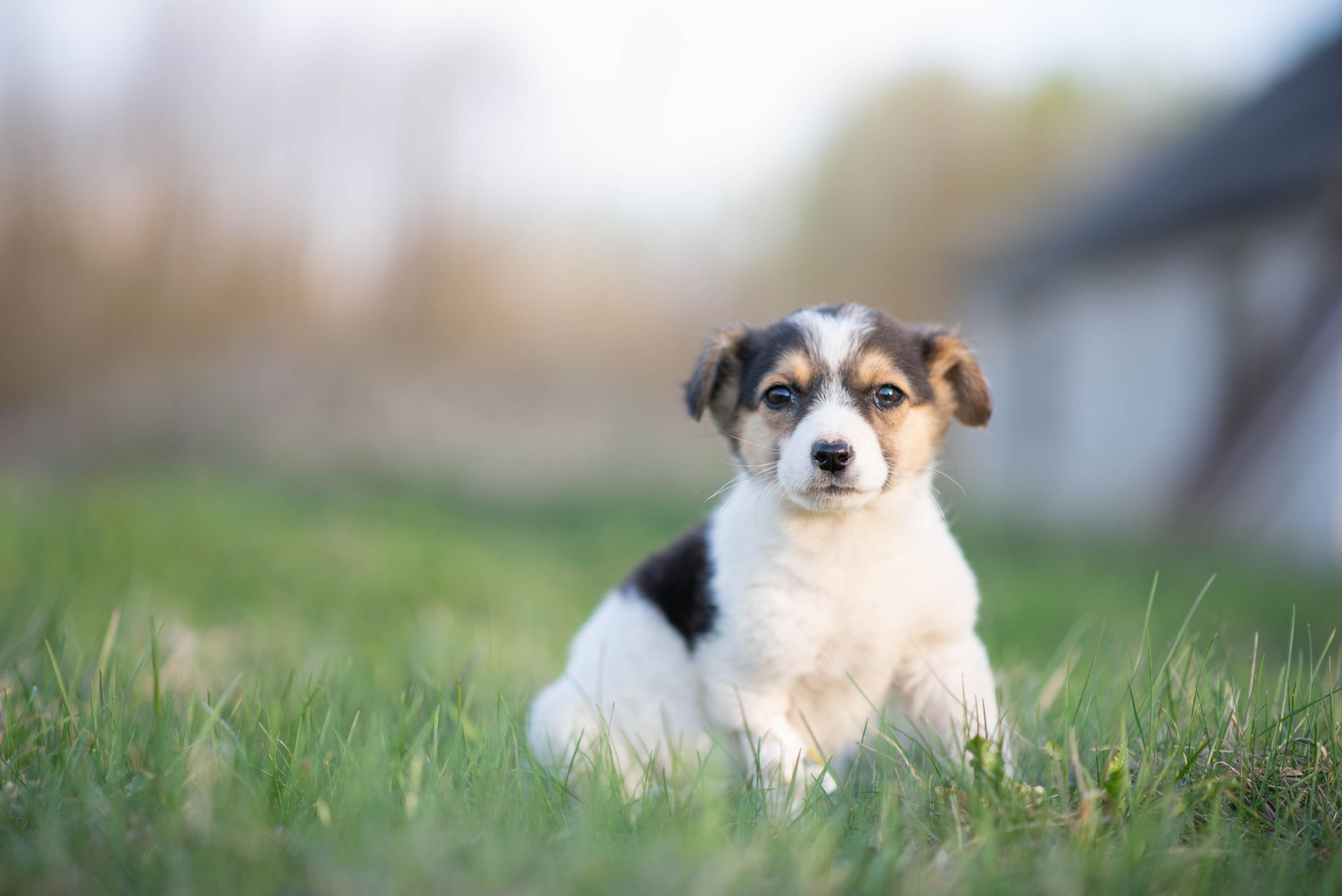
April pups arrive during the spring surge—longer daylight, rising temperatures, and the biological push that comes with seasonal change. You'll often see bold, curious temperaments in these dogs, with strong prey drive and a restlessness that needs channelling. Not universal, but common enough to plan for.
Their first fear period lands around 8–11 weeks, which puts you in late May or June—warm weather, outdoor distractions, and a critical socialisation window when the world is loud and busy. Their adolescence—roughly 6–18 months depending on breed—unfolds through summer and autumn. That's your training gauntlet: hormones, distraction, and the phase where recall vanishes and selective deafness appears. The dog will tell you when they've hit it.
The April Temperament: What You're Working With
April-born dogs often present as forward, confident, and quick to engage with novelty. Not anxious—curious. They see something move, they want it. That's prey drive, and spring births seem to correlate with higher baseline arousal. Whether it's the dam's condition during late pregnancy, the environmental stimulation during the neonatal period, or simply the fact that breeders with spring litters tend to raise working lines, the pattern holds.
You'll want an off-switch trained early. A dog born in April with no impulse control by six months is a nightmare by twelve. Crate training, place work, and capturing calmness become non-negotiable. The drive is useful—it makes them biddable in the right context—but it needs a framework.
Show lines may soften this. Working lines will amplify it. If you've got a spring-born Malinois or collie, you're not raising a pet—you're managing a small working athlete. A spring-born Cavalier is a different conversation, though they'll still benefit from structure.
Socialisation Windows and Seasonal Timing

The critical socialisation period runs from roughly 3 to 14 weeks, according to the American Veterinary Medical Association. For an April puppy, that's May through early July—peak outdoor season. You've got weather on your side for exposure work: farmers' markets, car parks, cafés with outdoor seating, children playing in parks.
But you've also got more stimulation than a January pup would face. Fireworks season starts creeping in by late June in some regions. Thunderstorms. Lawn mowers. The world is louder, and your puppy's brain is wide open. Some dogs handle it beautifully. Others get nervy. Watch for stress signals—yawning, lip licking, whale eye—and don't push through them. Socialisation isn't exposure therapy; it's building positive associations.
Their second fear period hits around 6–14 months. For your April dog, that's October through spring of the following year. Shorter days, colder weather, and a dog who suddenly spooks at the bin lorry they've seen a hundred times. It passes, but you'll need patience. Don't coddle, don't punish—just stay matter-of-fact and keep the routine steady.
Adolescence in Summer: The Training Crucible

An April-born dog hits adolescence somewhere between late summer and early winter, depending on size and breed. Small breeds mature faster; giant breeds take two years or more. But the bulk of the chaos—the phase where your polite puppy becomes a teenage delinquent—lands squarely in summer.
That means distractions. Barbecues. Paddling pools. Other dogs everywhere. Recall goes to pieces. Lead manners regress. The dog who walked beautifully at four months is now dragging you toward every leaf that moves. This is normal. Annoying, but normal.
You'll need to go back to basics: high-value rewards, shorter training sessions, and a lot of repetition in low-distraction environments before you proof it in the park. Adolescence isn't a training failure—it's a developmental stage. The dog's brain is pruning synapses and rewiring for adult behaviour. They're not being difficult; they're literally under construction.
Summer weather helps with exercise, at least. A tired dog is a sensible dog, and you can burn energy with longer walks, swimming, and fetch without battling ice and darkness. Just watch for overheating—dogs don't thermoregulate well, and a high-drive adolescent will run themselves into heatstroke if you let them.
Breed, Line, and Individual Variation
Birth month is a footnote compared to genetics. An April-born working cocker from field trial lines will have more drive at eight weeks than a show-line golden retriever at eight months, regardless of season. A nervy breed—say, a poorly bred border collie—will be nervy in any month. A sensible breed—a Labrador from health-tested, stable parents—will be sensible.
What April does is set the calendar. It determines when your puppy's developmental milestones intersect with weather, daylight, and your own schedule. If you work outdoors, a spring puppy is easier to integrate. If you're home-based, a winter puppy might suit better—fewer distractions during early training, and adolescence arrives when you've got more time indoors.
There's also the litter effect. Spring litters often come from planned breedings—breeders aiming for summer puppy sales or field trial prospects ready for autumn training. That can mean better-socialised pups from more experienced dams. Or it can mean overproduction and corner-cutting. The birth month tells you nothing about the breeder's ethics, so do your homework.
Practical Training Notes for April-Born Dogs
Start crate training and alone-time work early—by the time summer arrives and you want to enjoy the garden without a puppy underfoot, you'll need them able to settle indoors. An April pup who hasn't learned to be calm by June is going to be a liability at every barbecue.
Use the good weather for lead work. Pavements, car parks, quiet streets—get the foundations in before adolescence. A dog who can walk on a loose lead at four months won't magically forget it at ten, but they'll test it. If you never taught it properly, adolescence will expose that.
Prey drive shows up early in spring pups. If your April dog is fixating on birds, squirrels, or the neighbour's cat by twelve weeks, you've got a management job ahead. Don't let them rehearse the chase. Every successful chase wires the behaviour deeper. On the lead, high-value rewards for disengagement, and a rock-solid recall before they're ever off-lead near wildlife.
Finally, remember that a bold puppy isn't a confident adult by default. Boldness at eight weeks is often just low fear response, not true confidence. Confidence is built through successful experiences, clear communication, and a handler who doesn't panic when things go sideways. The dog will tell you what they need—your job is to listen.
Sources
- American Veterinary Medical Association. (n.d.). Dog Behavior and Training. Retrieved from https://www.avma.org/resources/pet-owners/petcare/dog-behavior-and-training
Ready to read your dog's soul?
Written by Callum. Read your pet's cosmic chart →