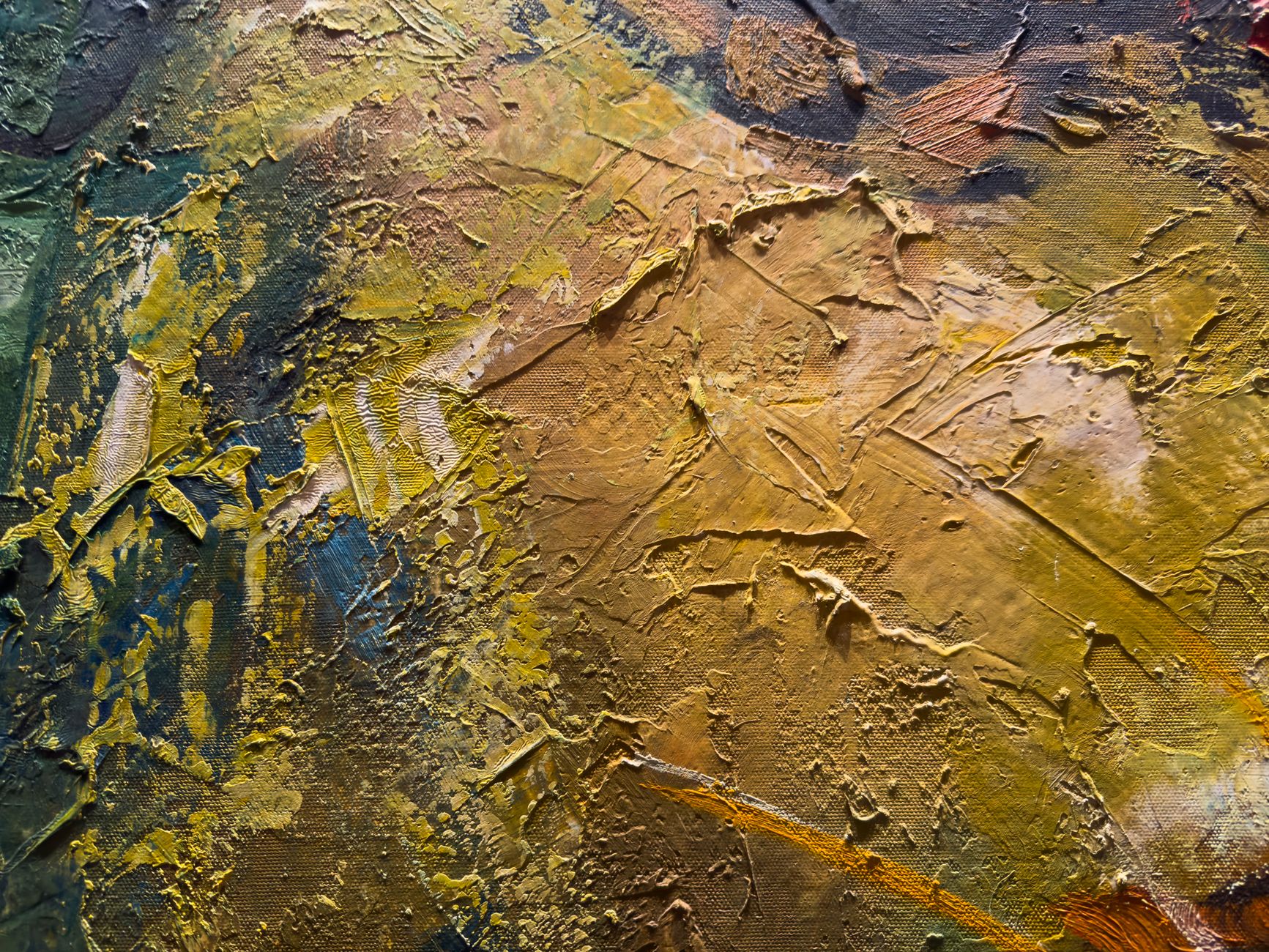
An oil painting pet portrait isn't just a picture of your dog. It's a physical object with weight, texture, and presence — the kind of art that stops people in a hallway because the light catches differently every time they pass. Oil is the medium Rembrandt used to paint The Night Watch, the medium Velázquez chose for royal portraits, and it's the reason those paintings still glow four hundred years later. When you commission an oil portrait of your dog, you're choosing the same permanence, the same luminous depth, the same archival integrity that has kept fine art alive across centuries.
Oil paint dries slowly, which means the artist can blend, layer, and rework until your dog's expression is exactly right — not close, not good enough, but true. The pigment sits in linseed oil, which refracts light in a way no other medium does. That's why oil portraits have that inner glow, that sense of life under the surface. And because oil paint is chemically stable and doesn't fade like watercolor or degrade like acrylics, your dog's portrait will look the same in 2125 as it does the day you hang it. That's not marketing language — that's material science. According to the Smithsonian's conservation guidelines, properly cured oil paintings on archival canvas are among the most stable art objects in existence, outlasting paper, textiles, and most modern synthetics.
This is the format for a dog you want your grandchildren to know.
Why Oil Paint Captures Depth No Other Medium Can
Oil's magic is in the layers. A skilled portrait artist doesn't paint your dog's fur in one pass — they build it in thin glazes, each one slightly transparent, so light travels through the paint and bounces back from the canvas beneath. That's why an oil-painted black dog doesn't look flat and dead; you see blue in the shadows, amber where the sun hits, the sense of a living creature with blood and warmth under the coat. Watercolor sits on the surface. Digital printing is a photograph of pigment. Oil paint is architecture.
I've watched people stand in front of oil portraits and reach out — not to touch, but because their brain registers it as a three-dimensional object. The texture of the brushstrokes, the way the paint catches light at an angle, the physicality of it: oil demands to be seen in person. A photo of an oil painting is like a photo of the Grand Canyon. You understand the shape, but you miss the experience.
This is why oil is the choice for formal portraits, for work that will hang in a dining room or a library or above a mantel — places where art is meant to preside, not decorate. If your dog had the kind of presence that changed the room when they walked in, oil is the medium that holds that.
The Heirloom Argument: Why Oil Portraits Last Centuries
Watercolor fades in direct sunlight within decades. Acrylics can yellow or crack as the polymer binder degrades. Prints are only as permanent as the paper and ink technology that made them. Oil paint, once fully cured, is chemically inert. It doesn't oxidize. It doesn't break down. Museums don't restore oil paintings because the paint failed — they restore them because the canvas aged, or because someone cleaned them with the wrong solvent in 1890.
When you commission an oil painting style portrait of your dog, you're not buying art for yourself. You're buying it for the next century. For the grandchild who never met your dog but will grow up seeing her face every day, learning her name, hearing the stories. That's what heirloom means — not expensive, but enduring. A portrait that doesn't need to be reprinted, re-scanned, migrated to a new file format, or protected from light. It just is.
This is the medium for a love that doesn't have an expiration date.
Texture, Brushwork, and the Painter's Hand

One of the most underrated qualities of oil painting is that you can see the artist's hand. The brushstrokes are visible. The palette knife marks, the places where the paint is thick and sculptural, the places where it's whisper-thin — all of it is evidence of a human being making ten thousand small decisions to get your dog's eyes right, to capture the tilt of his head, the way his ear folds.
That texture is part of the art. It's not a flaw to be smoothed out in Photoshop. It's proof of labor, proof of care, proof that this painting didn't come off an assembly line. When light rakes across an oil portrait, you see the topography of the paint itself — and that physicality makes the portrait feel more real than a photo ever could.
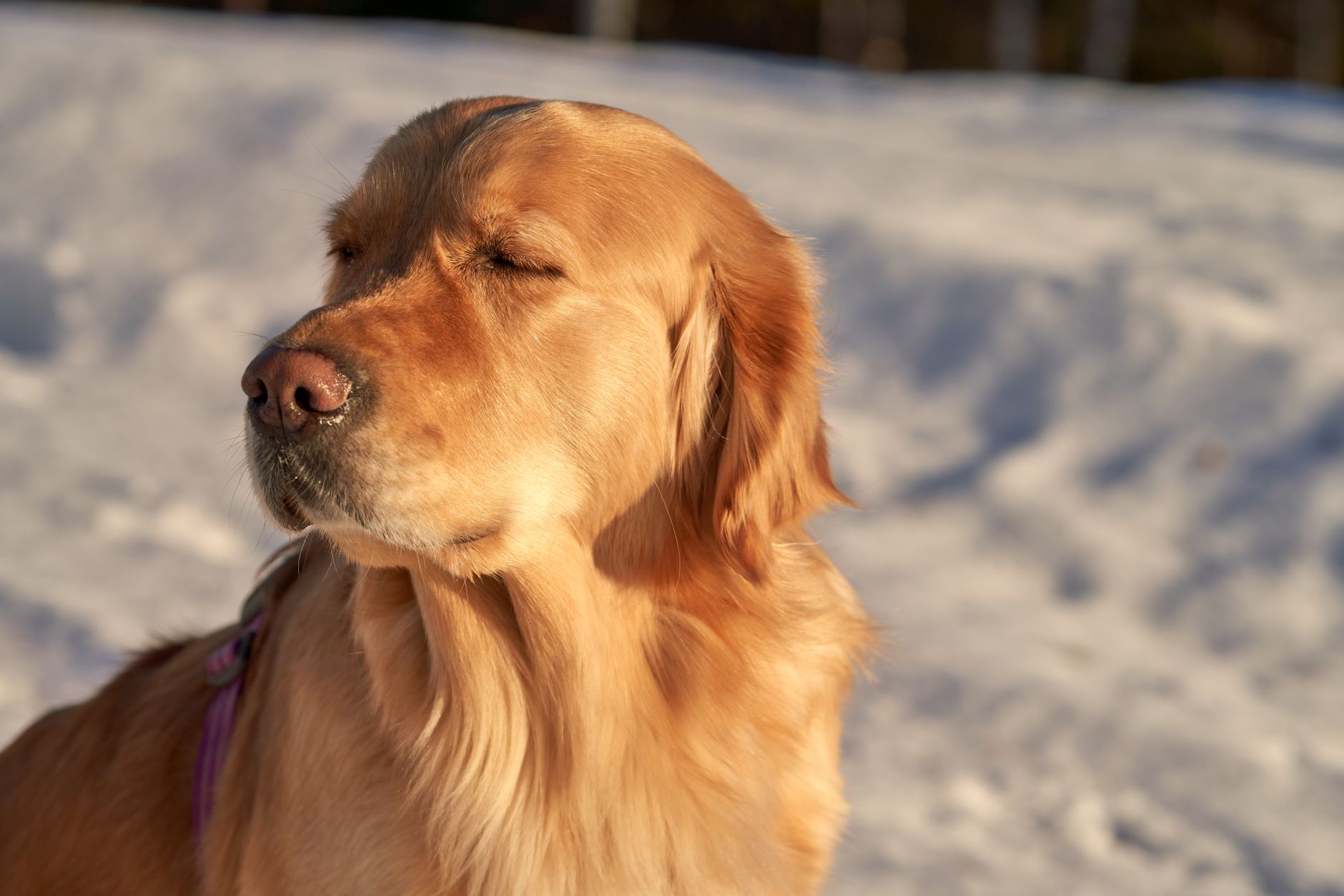
I remember the first time I saw a Golden Retriever portrait done in oil, the way the artist had built up the fur in thick, directional strokes so you could almost feel the texture under your fingers. It wasn't realistic in a photographic sense. It was realistic in a truer sense — it looked like the idea of that dog, the essential Goldenness of him, the warmth and the weight and the way he moved through the world.
That's what oil gives you: not a copy, but a translation. Your dog as they are, and also as they feel.
Commissioning an Oil Portrait: What to Expect
Oil paintings take time. Not because the artist is slow, but because the paint itself needs to dry between layers — sometimes days, sometimes weeks, depending on the thickness and the pigments used. A responsible oil painter won't rush this. They'll let each layer cure, then come back and refine. That's how you get depth. That's how you get a portrait that doesn't crack in five years.
You'll usually start with a consultation: the artist will ask for photos, ask about your dog's personality, ask what you want the portrait to say. Regal? Playful? Quiet and dignified? The composition, the background color, the light source — all of it is in service of that emotional truth. Then they'll often send you a preliminary sketch or underpainting so you can approve the composition before they commit to the final layers.
The finished piece will arrive on stretched canvas, ready to frame or hang as-is. Some artists varnish the surface for protection and to even out the sheen; others leave it unvarnished so you can choose your own finish later. Either way, you're holding a physical object that weighs something, that has texture and presence, that will outlive you.
If you want to see how oil painting translates different breeds and personalities, explore the portraits gallery — each one is a reminder that this isn't just decoration. It's documentation of a soul.
Ready to Commission Your Dog's Oil Portrait?
An oil painting is the choice when you want permanence, when you want depth, when you want a portrait that feels like a piece of your dog's presence is still in the room. It's the medium that says: this love mattered. This life mattered. And I'm not letting time erase it.
At Little Souls, every portrait is hand-painted by a working artist — no prints, no filters, no assembly line. Just a human being translating your dog's spirit into pigment and light, building a piece of art that will outlast all of us.
Start your commission at Little Souls Pawtraits — and give your dog the heirloom they've already earned.
Sources
- Smithsonian Museum Conservation Institute. "Care of Oil Paintings." Smithsonian Institution. https://www.si.edu/mci
See your dog painted the way you see them
Written by River. See their portrait →