
Your puppy's first birthday lands right in the middle of a profound biological shift. Between months ten and fourteen, most dogs transition from juvenile chaos to something closer to their adult temperament. Their growth plates are closing. Their cortisol regulation is maturing. The world stops feeling quite so overwhelming. This is the moment to anchor rituals that will shape the next decade together.
In my exam room, I watch people bring in one-year-olds for their annual checkup, and I can already see which relationships will weather the teenage months ahead. It's not about obedience or even socialization—it's about whether the human has learned to read the dog. The first birthday is your chance to practice that literacy.
What the First Year Actually Built
By twelve months, your puppy's brain has logged thousands of hours of pattern recognition. They know the sound of your keys. The pre-walk energy shift in your body. Which rooms feel safe when thunder comes. According to the American Veterinary Medical Association, this first year establishes the neurological scaffolding for how they'll process stress, novelty, and attachment for life.
The body keeps the score here. A puppy who spent months in a crate while you worked will have different autonomic wiring than one who had midday enrichment. Neither is broken—but the birthday is a moment to inventory what you've built and what needs reinforcement. I see dogs at one year who still startle at dropped objects, or who can't settle unless touching their person. These are quiet symptoms worth addressing before they calcify.
What I tell clients: the first birthday isn't about celebrating perfection. It's about acknowledging the whole animal—the fear periods you navigated, the housetraining setbacks, the 3 a.m. diarrhea cleanups that taught you both resilience. That's the bond. Bodies talking.
Building Birthday Rituals That Actually Matter
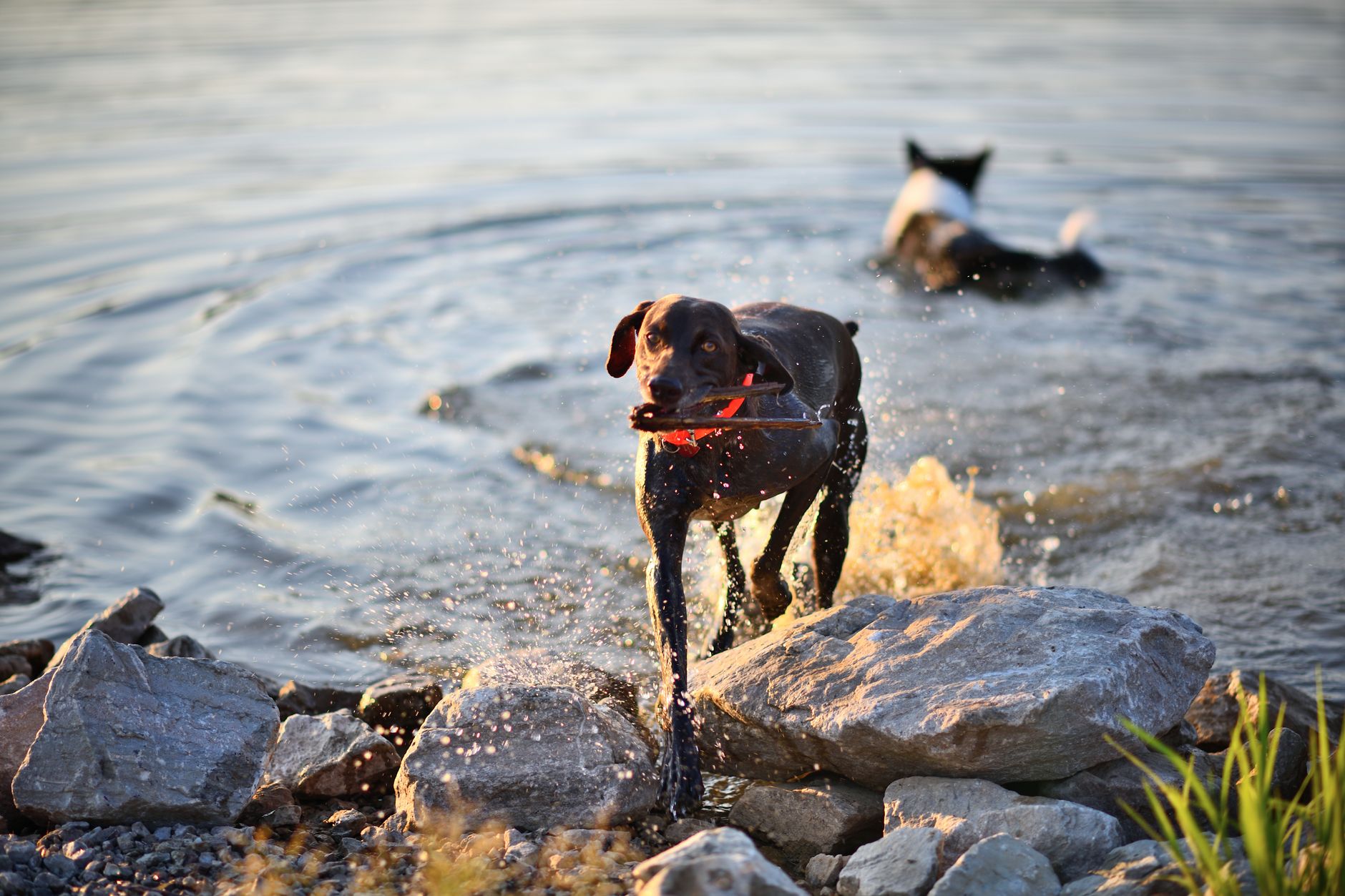
Forget the dog bakery cupcakes (most contain ingredients I'd rather you skip—xylitol scares, food dye, wheat in sensitive bellies). The rituals that land are the ones that mirror what already soothes your specific dog.
For my own dog's first birthday, we drove to the lake at dawn. No other dogs, no agenda. I brought a long line and let her choose the pace. We sat in the shallows for twenty minutes while she mouthed pebbles and I drank terrible gas-station coffee. It was boring and perfect. She still pulls toward that access road five years later.
Here's what I recommend:
- A location they've never scent-marked. Novel environments activate exploratory circuits differently than the usual walk. It doesn't need to be fancy—a different neighborhood, a hardware store that allows dogs, a friend's backyard.
- Unstructured time. No training, no commands unless safety requires it. Let them lead. Watch what they investigate. This is data about who they're becoming.
- A photo ritual you can repeat. Same spot, same angle, every year. I have clients who do doorframe portraits, or the dog sitting in their favorite chair. The continuity matters more than the aesthetics.
- Something chewy that takes thirty minutes. A frozen marrow bone, a bully stick, a raw recreational bone if they're experienced. The parasympathetic activation from sustained chewing is a birthday gift to their nervous system.
The Cosmic Part (Not Woo, I Promise)
Little Souls uses natal astrology to map your dog's temperament—not to predict the future, but to language what you're already noticing. A Taurus puppy at one year is settling into their body in ways a Gemini isn't. An Aries might still be launching at the door; a Cancer might finally trust that you come back.
The cosmic bond is just shorthand for paying attention at the level of pattern. In my practice, I use breed tendencies, pain scales, bloodwork trends. Astrology is another lens—one that invites you to see your dog as a distinct entity, not a generic puppy. That perspective shift is the work.
On their first birthday, pull up their birth chart reading. Notice what's changed since month three, when everything was teeth and chaos. Notice what's consistent. A dog born with Moon in Virgo might still be checking that all family members are accounted for before they settle. That's not anxiety—that's wiring. Understanding it changes how you respond.
What Happens After the Party Hat Comes Off

The second year is harder than the first for most people. The puppy cuteness fades. The teenage testing begins—especially in larger breeds who don't mentally mature until eighteen to twenty-four months. I see a spike in relinquishments between months twelve and eighteen, and it breaks my heart every time.
The birthday ritual is your anchor. It's proof you can mark time together without crisis. That you notice them. Next month, when they suddenly start barking at the mail carrier again (adolescent fear period, right on schedule), you'll have this memory of choosing them on purpose.
Start a birthday journal. Three sentences: what they loved this year, what challenged you both, what you want to protect going forward. I've kept one for my dog since year one. Reading back, I see how much I've changed as her person—how I stopped trying to fix her and started accommodating her wiring. That's the bond maturing.
When the First Birthday Feels Hard
Not every puppy's first year is a triumph. I've worked with clients whose dogs are still reactive, still destructive, still anxious despite everything they've tried. If that's you—if the birthday feels like a referendum on your failure—please hear this: one year is early.
Some dogs don't settle until two, or three, or five. Some carry trauma from before you met them that no amount of love will fully erase. The birthday isn't about having arrived. It's about committing to the next lap. In my exam room, the dogs who thrive long-term aren't the naturally easy ones—they're the ones whose people stayed curious instead of defeated.
If you're struggling, the birthday is a good time to bring in help. A veterinary behaviorist, a certified separation-anxiety trainer, a pain assessment if something feels off physically. You don't get points for suffering alone.
Ready to See Who They're Becoming?
Your puppy's first birthday is the end of the beginning—the moment you stop guessing and start knowing. At Little Souls we map the cosmic blueprint you've been living with all year, turning your observations into language. It's not magic. It's just permission to trust what you've already noticed.
Sources
- American Veterinary Medical Association. "Your Pet's First Year." AVMA, https://www.avma.org/resources/pet-owners/petcare/your-pets-first-year. Accessed 2024.
Ready to read your dog's soul?
Written by Elena. Read your pet's cosmic chart →