When a dog dies, the house feels wrong. The silence where their breathing used to be. The corner where the bed sat. Grief is love with nowhere to go, and in the weeks that follow, many people find themselves reaching for something tangible—a way to hold the shape of the absence.
A memorial pet portrait does that work. Not as decoration. As witness.
It's not about replacing your dog or "moving on." It's about creating a ritual object that holds space for the enormity of what you've lost. The right portrait doesn't just look like your dog—it feels like them. And that distinction matters more than most people realize when they start searching.
What Makes a Memorial Pet Portrait Different From a Regular Commission
You can commission a pet portrait while your dog is alive—many people do. But a memorial portrait carries different emotional weight. You're not capturing a moment. You're translating an entire life into a single image.
The artist you choose should understand that. They should ask questions beyond breed and coat color: What was their personality? What did they love? What do you want to feel when you look at this?
Memorial portraits often incorporate symbolic elements—birth and death dates, a favorite toy, the landscape where you scattered ashes, astrological symbols if that resonates. These aren't decorative flourishes. They're anchors. They turn a likeness into a story.
Some clients commission a cosmic pet portrait that maps their dog's birth sky—the exact positions of planets and constellations on the day they were born. Others prefer the quiet intimacy of watercolor or the gravitas of oil painting. There's no wrong choice. Only what feels true to the dog you knew.
Choosing the Right Style for Your Dog's Spirit

Style isn't about what's trendy. It's about what matches your dog's energy—and what you can bear to look at in your grief.
Some people need softness. Watercolor and impressionist styles blur edges, leaving room for memory to fill in the gaps. The portrait becomes dreamlike, less confrontational. If you're raw, if seeing their exact face feels like too much, these styles give you distance without detachment.
Others need presence. Renaissance and royal portraits elevate your dog to the status they always held in your life—regal, central, undeniable. If your grief includes anger at the unfairness of their short life, this approach validates that: they deserved more time, and this is how I say so.
Modern minimalist and line art work differently—they distill your dog to essential shapes. A curve of ear. The slope of a muzzle. These portraits don't try to capture everything. They ask: what is the one line that meant 'you'?
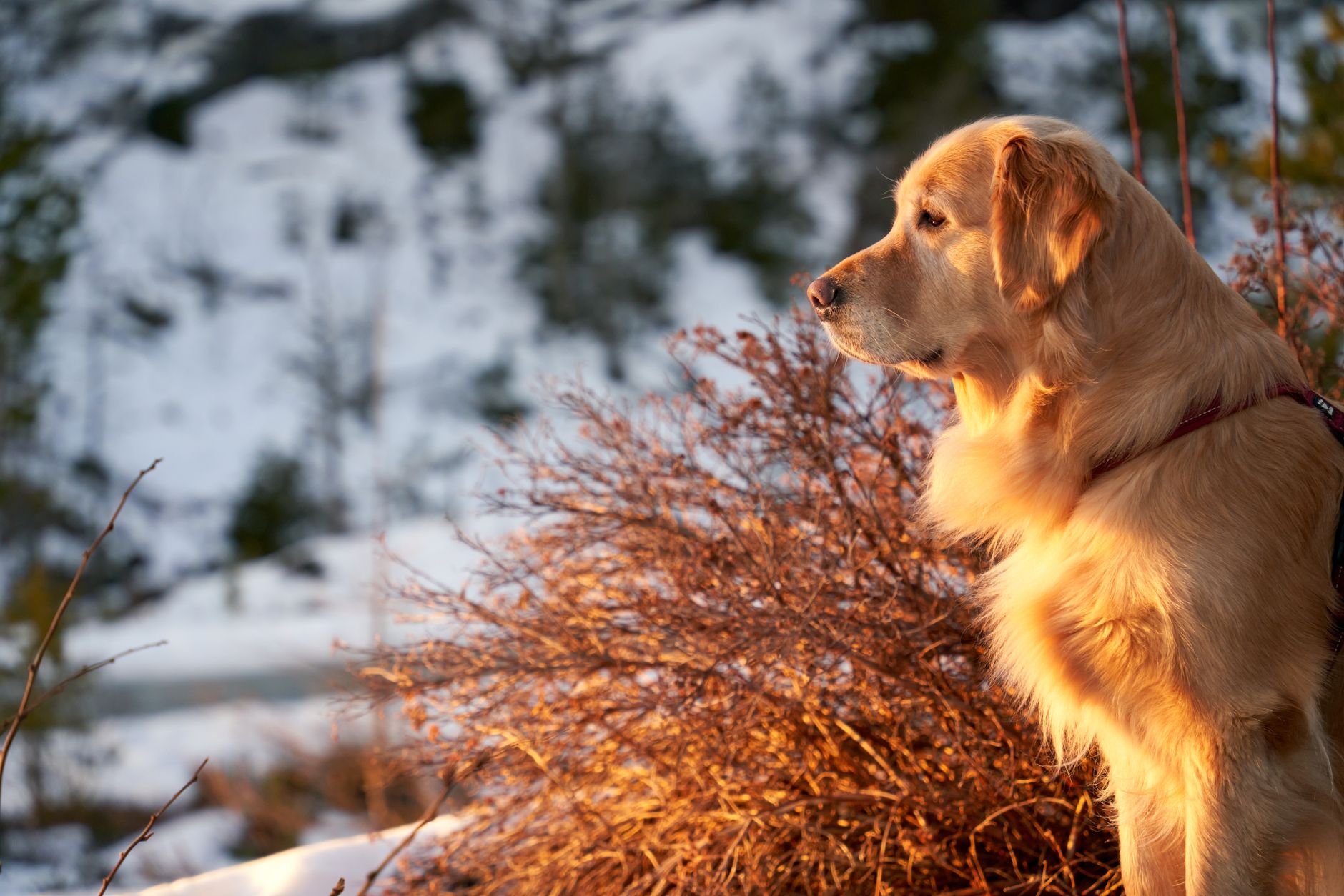
For breed-specific commissions, it helps to work with an artist familiar with your dog's structure. A Golden Retriever portrait should capture that specific open-hearted gaze. A Labrador needs that blocky, earnest head shape. A Border Collie requires intensity in the eyes. The details matter because your dog's details mattered.
What Photos to Send Your Artist (and What to Say)
This is where people get stuck. You have 10,000 photos and none of them feel right. Or you have one perfect shot but worry it's not "good enough" for a painting.
Here's what helps: send 3–5 photos that show your dog's personality, not just their face. The artist needs to see how they held their body, how their eyes looked when they were happy versus tired, the angle of their head when they were listening.
Include at least one close-up of their face in good natural light—this gives color and detail reference. Then add context shots: them in their favorite spot, doing their favorite thing, the expression you saw most often.
And tell the artist the things a photo can't show:
- "She always tilted her head exactly like this when I said her name."
- "His left ear never stood up all the way."
- "She had this way of looking at me like she knew exactly what I was thinking."
According to the American Veterinary Medical Association, the bond between humans and companion animals is profound and complex, and memorializing that bond through art is a recognized part of healthy grieving. The artist isn't a mind reader. They need your memory to guide the work.
If your dog had a distinctive feature—a white chest blaze on a black Lab, the gray muzzle of a senior Golden Retriever, the perpetual worried eyebrows of a German Shepherd—name it explicitly. Those details are where recognition lives.
The Timeline: When to Commission and What to Expect
There's no "right" time. Some people commission a memorial portrait within days of their dog's death—they need the project, the forward motion, the sense of doing something. Others wait months or years until the grief has settled enough that they can look at photos without breaking.
Both are allowed.
Most custom portrait artists work on a 3–6 week timeline from photo approval to final delivery. If you're commissioning around a significant date—your dog's birthday, the anniversary of their death, a holiday that feels impossible without them—communicate that early. Artists can often accommodate, but they need to know.
You'll typically see a preliminary sketch or digital mockup before the final painting begins. This is your chance to request changes: a different expression, a shifted pose, more or less background detail. Use it. The goal isn't to get it "done"—it's to get it right.
When the portrait arrives, give yourself permission to have feelings about it. Some people weep. Some feel immediate peace. Some need to put it away for a few days before they can hang it. All of that is the work of mourning, and the portrait is doing exactly what it should: making space for the truth of your loss.
Where the Portrait Lives in Your Home (and Your Life)
A memorial portrait isn't passive. It's not "art" in the decorative sense. It's a site. A place you return to.
Some people hang it in the entryway—the first thing they see coming home, the last thing before they leave. Others place it in a private room, somewhere they can sit with it when they need to. A few keep it on an altar or shelf with their dog's collar, ashes, or other memorial objects.
The location matters less than the intention. The portrait should be somewhere you can look at it when you need to—not hidden, not on display for others. This is between you and your dog.
Over time, the portrait's role may shift. In the first months, it might feel like a wound—proof of absence. Later, it becomes a comfort. Eventually, for many people, it's simply where their dog lives now. Not gone. Just translated into a different form.
You are allowed to talk to it. You are allowed to touch the frame when you pass. You are allowed to leave offerings—a flower, a treat, a tennis ball. Grief has no rules, and neither does how you hold your dog's memory.
Ready to Create Your Dog's Memorial Portrait?
A memorial pet portrait is not about forgetting or moving forward. It's about refusing to let your dog become a ghost.
At Little Souls, we paint custom memorial portraits that honor your dog's exact spirit—whether that's a cosmic astrology piece that maps their birth sky, a Renaissance-style oil painting that gives them the grandeur they deserved, or a watercolor that holds them gently in memory.
Every portrait begins with your story. We ask about personality, quirks, the details only you would know. Then we translate that into something you can hold when grief feels too big for your body.
Your dog was never "just a dog." The portrait shouldn't be "just a painting."
Sources
- American Veterinary Medical Association. (n.d.). Coping with the loss of a pet. AVMA. https://www.avma.org/resources-tools/pet-owners/petcare/coping-loss-pet
See your dog painted the way you see them
Written by Rowan. See their portrait →