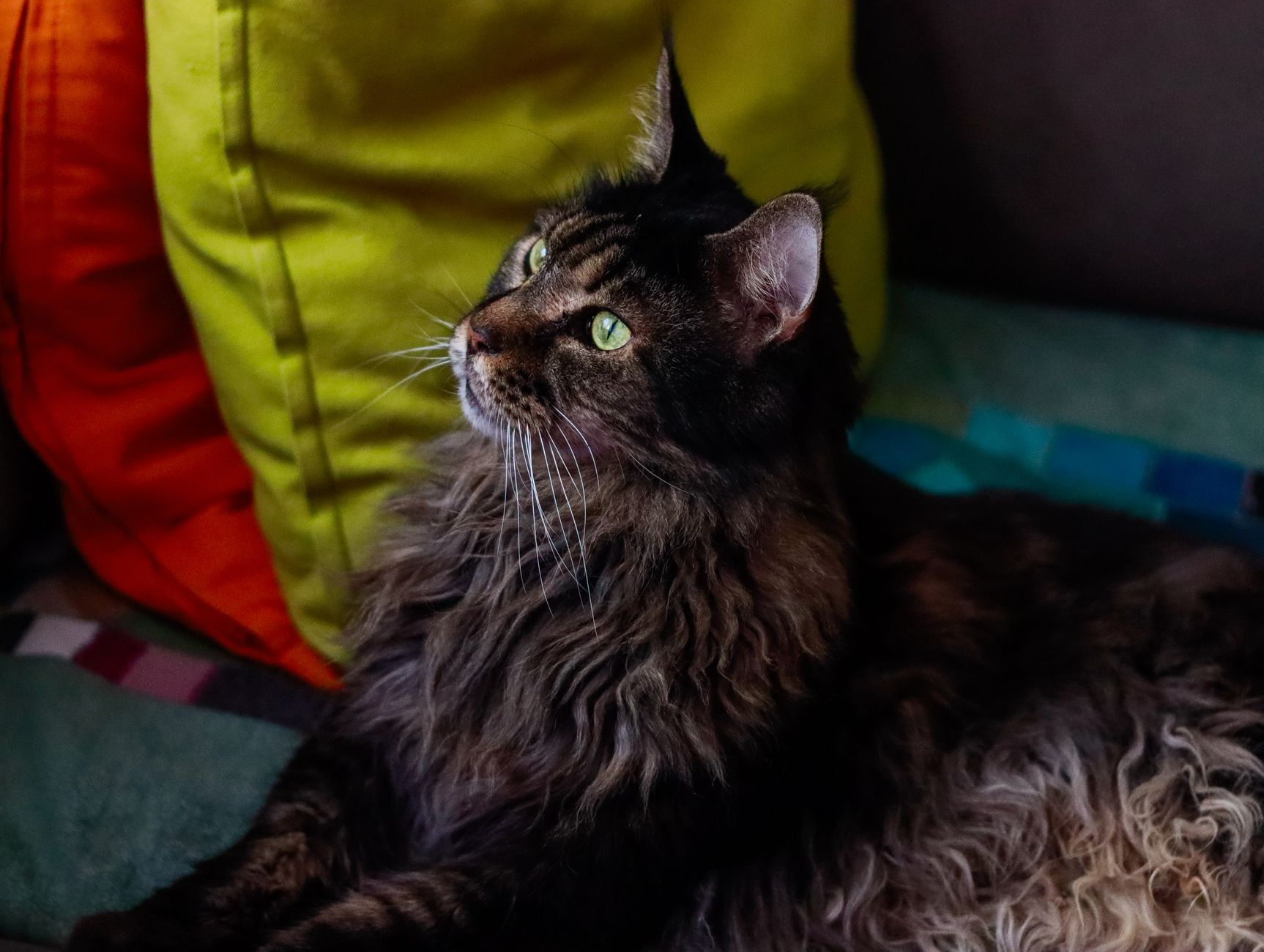
A cat breed portrait isn't a show catalogue entry. It's a record of the specific soul who happens to inhabit a Maine Coon's body or a Siamese frame or a tabby's street-smart build. The best portraits capture what makes your cat themselves — the way your British Shorthair sits like minor royalty, the way your Bengal moves like contained lightning, the way your rescue tabby has decided the windowsill is an indoor empire.
Breed matters because it shapes temperament, movement, presence. But the cat is deciding how to wear those traits. A portrait that honours breed character without flattening individual personality becomes an heirloom — the kind of art you look at in ten years and feel the exact texture of who they were.
Why Breed-Specific Portraits Require Different Approaches

Maine Coons demand space on the canvas. Not because they're large (though they are), but because their presence is architectural — all flowing fur and slow-blink sovereignty. A Maine Coon portrait needs room for that cascade of chest ruff, the lynx-tip ears, the way they occupy a room like a benevolent cathedral. Watercolour captures their softness; oil painting gives weight to their grandeur.
Siamese cats are all angles and intensity. Their portraits work best with clean lines, sharp contrast, dramatic lighting — art styles that match their vocal, opinionated, deeply present energy. A Siamese doesn't lounge; they arrange themselves. The portrait should reflect that feline economy of movement, that sense of a cat who knows exactly what they want and will tell you about it.
Tabbies — the most common, the most overlooked, the most themselves — need portraits that see past "just a cat." A tabby portrait should capture the particular intelligence in their eyes, the specific pattern of their M-marked forehead, the way they've made peace with being both wild and domestic. According to the Cornell Feline Health Center, tabby patterns carry ancient genetics — your cat is wearing the same coat design as their ancestors. The portrait should honour that lineage.
The Breed Traits That Matter in Portraiture
Physical breed traits are the obvious starting point: a Persian's flat face and luxurious coat require different artistic techniques than a Siamese's sleek lines. But the subtle traits — the ones that live in posture and gaze — matter more.
Maine Coons have what I call "the long look" — a slow, evaluating stare that suggests they're considering your proposal and will get back to you. Ragdolls go genuinely limp when held, a consent-based surrender that's both trusting and slightly unnerving. Scottish Folds sit like small owls, their folded ears giving them a permanent expression of polite surprise. These aren't quirks — they're breed soul.
The best cat breed portraits capture these invisible traits. A Bengal portrait should feel like contained motion even when the cat is sitting still. A British Shorthair portrait should have that quality of amused tolerance, as if your cat is generously allowing you to exist in their space. A Tuxedo cat portrait needs to capture their particular brand of formal chaos — the cat who looks like they're attending a gala but is absolutely going to knock your water glass off the table.
Matching Art Style to Breed Personality

Renaissance portraits work beautifully for breeds with natural gravitas — Maine Coons, Norwegian Forest Cats, British Shorthairs. These are cats who already carry themselves like minor nobility; putting them in period dress simply makes the subtext text.
Modern minimalist suits the sleek, angular breeds — Siamese, Oriental Shorthairs, Russian Blues. Clean lines, negative space, a focus on silhouette and gaze. These cats don't need ornamentation; their elegance is structural.
Cosmic astrology style captures the mysterious, intuitive breeds — black cats, Ragdolls, any cat who seems to be receiving transmissions from elsewhere. When you commission a cosmic portrait, you're not just painting a cat; you're painting the soul who chose that particular body, that particular birth moment, that particular human to train.
For mixed breeds and rescues — the cats whose lineage is "yes" — the style should match their personality rather than trying to guess their genetic cocktail. A scrappy alley cat might suit pop art or vintage Victorian (the irony is the point). A gentle, elderly rescue might need the soft reverence of watercolour or impressionist work.
What to Tell Your Portrait Artist About Your Cat
Breed name alone isn't enough. Your artist needs:
Birth date and time (even approximate) — not for astrology gimmick, but because a cat's birth month shapes their temperament in observable ways. A January Maine Coon has different energy than an August one. This isn't mysticism; it's pattern recognition across thousands of cats.
The specific quirks that make them themselves — how they sit, where they sleep, what they do with their paws when they're thinking. A portrait of your Tabby should capture the way they tuck their paws under their chest like a loaf, or the way they chirp at birds, or the specific angle of their head when they're judging you.
Their relationship to consent — because this is what separates cats from dogs in portraiture. A dog portrait can show exuberant joy, tongue-out chaos, desperate devotion. A cat portrait must show the quiet no, the self-possession, the sense that they're allowing this interaction on their own terms. Even a lap cat chooses to be there; the portrait should reflect that agency.
Their colour in natural light — because a black cat in sunlight is actually seven shades of charcoal and chocolate and blue-black. A Maine Coon in winter light versus summer light is a different animal. Send photos at different times of day, in different rooms, doing different things. Let the artist see the range.
When Breed Standards Don't Match Your Cat
Some cats are technically their breed but spiritually something else entirely. I've met Ragdolls with the emotional range of a Siamese, Maine Coons who think they're lap cats, British Shorthairs who never got the memo about dignified reserve. The portrait should paint the cat you have, not the breed description.
This is especially true for rescues whose breed is guesswork — the cat who might be part Siamese or might just be loud and angular by personal choice. The portrait artist doesn't need to solve the genetic mystery; they need to see the cat clearly. Tell them: this cat moves like water, or this cat sits like a judge, or this cat has never met a stranger. That's the information that makes a breed portrait into a soul portrait.
For mixed breeds, consider commissioning a custom cat portrait that focuses on personality rather than lineage. The best portraits of these cats capture their particular genius — the way they've synthesized multiple breed traits into something entirely their own, or decided to ignore all of it and simply be themselves with great conviction.
Ready to Commission Your Cat's Portrait?
Browse the Little Souls gallery to see how different breeds translate into different art styles — or start with your cat's specific breed page to see portraits of cats who share their lineage. Each portrait begins with your cat's birth chart and your stories about who they are, because a cat breed portrait should feel like recognition: yes, that's exactly them. The small, complicated god who happens to be a Maine Coon, a tabby, a Siamese, a rescue who chose you. The cat who is deciding, right now, whether to allow this entire endeavour. On their own terms, as always.
Sources
Cornell University College of Veterinary Medicine. "Cats and Their Coats." Cornell Feline Health Center. https://www.vet.cornell.edu/departments-centers-and-institutes/cornell-feline-health-center/health-information/feline-health-topics/cats-and-their-coats
See your cat painted the way you see them
Written by Maggie. See their portrait →