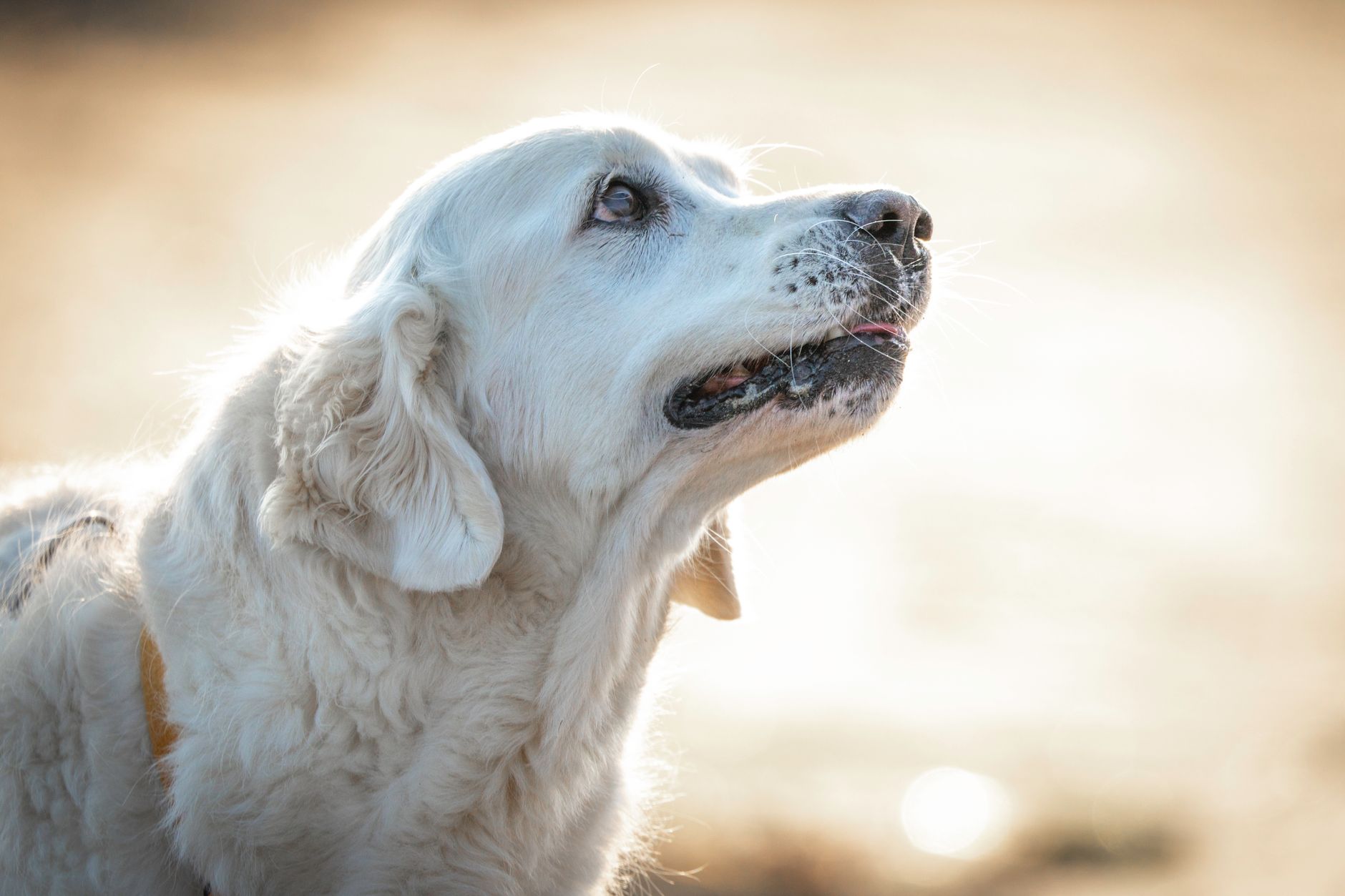
The phrase "Rainbow Bridge" appears in sympathy cards, vet office condolence letters, and online memorials. For many, it offers a vision of reunion that makes the unbearable slightly more bearable. For others, it feels too sweet, or doesn't match their belief system.
Both responses are valid. Grief is not one-size. This guide walks through the origin, the full text, what the metaphor offers, and how to honor your pet whether or not the Bridge resonates with you.
What Is the Rainbow Bridge?
The Rainbow Bridge is a prose poem—origin disputed, likely early 1980s—that describes a sunlit meadow just before heaven. In this place, pets who have died are restored to health and youth. They play, eat, and rest in comfort. They wait.
When their person dies, the pet recognizes them. They run to meet. And together, they cross the Rainbow Bridge into the afterlife.
The poem has no single canonical version. It circulates in slight variations, often unsigned. The American Veterinary Medical Association acknowledges it as one of the most commonly shared grief resources in veterinary medicine, though its author remains unconfirmed.
The metaphor offers three things:
- Reversal of suffering. Your dog is no longer sick, old, or in pain.
- Agency. Your pet is waiting for you, not gone into nothingness.
- Reunion. Death is a separation, not an ending.
For some, this is everything. For others, it's a starting place—a cultural script they borrow, adapt, or set aside.
The Full Rainbow Bridge Poem (Common Version)
This is one widely circulated version. No single text is "official."
Just this side of heaven is a place called Rainbow Bridge.
>
When an animal dies that has been especially close to someone here, that pet goes to Rainbow Bridge. There are meadows and hills for all of our special friends so they can run and play together. There is plenty of food, water and sunshine, and our friends are warm and comfortable.
>
All the animals who had been ill and old are restored to health and vigor. Those who were hurt or maimed are made whole and strong again, just as we remember them in our dreams of days and times gone by. The animals are happy and content, except for one small thing; they each miss someone very special to them, who had to be left behind.
>
They all run and play together, but the day comes when one suddenly stops and looks into the distance. His bright eyes are intent. His eager body quivers. Suddenly he begins to run from the group, flying over the green grass, his legs carrying him faster and faster.
>
You have been spotted, and when you and your special friend finally meet, you cling together in joyous reunion, never to be parted again. The happy kisses rain upon your face; your hands again caress the beloved head, and you look once more into the trusting eyes of your pet, so long gone from your life but never absent from your heart.
>
Then you cross Rainbow Bridge together.
You are allowed to find this comforting. You are also allowed to find it insufficient, or at odds with your own cosmology.
Where the Rainbow Bridge Came From

No one knows for certain. Three people have claimed authorship:
- Paul C. Dahm, who says he wrote it in 1981 and published it in a grief counseling newsletter.
- William N. Britton, who copyrighted a similar poem in 1994 titled "The Legend of Rainbow Bridge."
- Wallace Sife, founder of the Association for Pet Loss and Bereavement, who says he wrote it in 1998.
None has definitive proof of first authorship. The poem likely evolved in the oral tradition of pet loss support groups, veterinary offices, and early internet grief forums. It spread because it worked—it gave language to a specific, previously under-recognized kind of grief.
The metaphor itself draws on older imagery: the Bifröst Bridge in Norse mythology, which connected Earth and Asgard. A rainbow as a threshold between worlds. The idea that animals have souls, and those souls go somewhere.
What matters now is not who wrote it first, but that it became a shared vocabulary. When someone says "my dog crossed the Rainbow Bridge," you know exactly what they mean.
When the Rainbow Bridge Helps—and When It Doesn't
The Bridge offers a specific kind of comfort: deferral. Not "your dog is gone," but "your dog is waiting." For people who believe in an afterlife, or who simply need a story that softens the finality, this can be sustaining.
It helps when:
- You need a mental image to replace the last hard moment (euthanasia, sudden death, illness).
- You want to picture your pet happy, whole, and free of pain.
- You come from a faith tradition that includes reunion (Christianity, some forms of spirituality).
- You're talking to children, or people who need a gentler narrative.
It doesn't help—or can even sting—when:
- You don't believe in an afterlife, and the metaphor feels like bypassing.
- You need to sit with the reality of loss, not a story that defers it.
- The saccharine tone feels mismatched to the size of your grief.
- You hold a different cosmology (reincarnation, return to the earth, no continuity of individual soul).
You don't have to use it. Grief is not a script. If the Bridge doesn't land for you, there are other ways to hold your animal's memory—ways that honor your understanding of what happens after death, or your need to not know.
How to Honor a Pet Without the Rainbow Bridge

If the Bridge isn't your language, here are other rituals and metaphors that bear witness:
- "They returned to the earth." Scatter ashes in a place they loved. Plant something over them. Let their body become part of the ground they walked.
- "They're in my heart." Commission a memorial pet portrait that captures their specific soul—not a generic heaven scene, but them. A cosmic pet portrait uses their actual birth chart, grounding memory in the real sky they were born under.
- "I carry them forward." Donate to a breed rescue in their name. Sponsor another animal's medical care. Let their life create more life.
- "They were here." Write their name. Say it out loud. Keep a ritual object (collar, favorite toy, a tuft of fur in a locket). Presence, not paradise.
Some people blend metaphors. You can believe your dog's body returned to the earth and picture their spirit waiting. You can hold the Bridge lightly, as a story that helps on hard days, without claiming it as doctrine.
The work of mourning is not to pick the right story. It's to stay with the shape of the absence until it becomes something you can carry.
What Vets and Grief Counselors Say About the Rainbow Bridge
Veterinary grief counselors often include the Rainbow Bridge in condolence packets—not because it's scientifically accurate, but because it works for a large percentage of clients. It gives people a place to put their love when the animal is no longer physically present.
Dr. Wallace Sife, who founded one of the first pet loss hotlines, said the Bridge "gives people permission to grieve fully, because it says the bond doesn't end."
But modern grief theory also emphasizes continuing bonds—the idea that you don't "let go" of the dead; you renegotiate the relationship. The Rainbow Bridge is one version of that. So is talking to your dog's ashes. So is lighting a candle on their birthday. So is getting a dog zodiac portrait that freezes their personality in time.
There is no hierarchy of grief metaphors. The one that lets you breathe is the one that's working.
Ready to Remember Them as They Were?
Whether or not you hold the Rainbow Bridge, you can hold them—in image, in ritual, in the specific shape of their soul.
Little Souls creates memorial portraits that don't erase the loss, but bear witness to the life. We paint your dog or cat as they were: their exact markings, their gaze, the quality of presence only they had. You can choose a style that feels sacred to you—watercolor, renaissance, cosmic—or a scene from their happiest day.
This isn't about moving on. It's about having a place to return to when the missing is sharp.
Start your memorial portrait — we'll ask for their name, their birth date if you have it, and a photo that shows their whole face. What we send back is not a product. It's a ritual object. A way to say: you were here. You mattered. I will not forget.
Sources
- American Veterinary Medical Association. (n.d.). Coping with the loss of a pet. Retrieved from https://www.avma.org/resources/pet-owners/petcare/coping-loss-pet
- Britannica, T. Editors of Encyclopaedia (2024, December 19). Bifröst. Encyclopedia Britannica. https://www.britannica.com/topic/Bifrost
Ready to read your dog's soul?
Written by Rowan. Read your pet's cosmic chart →